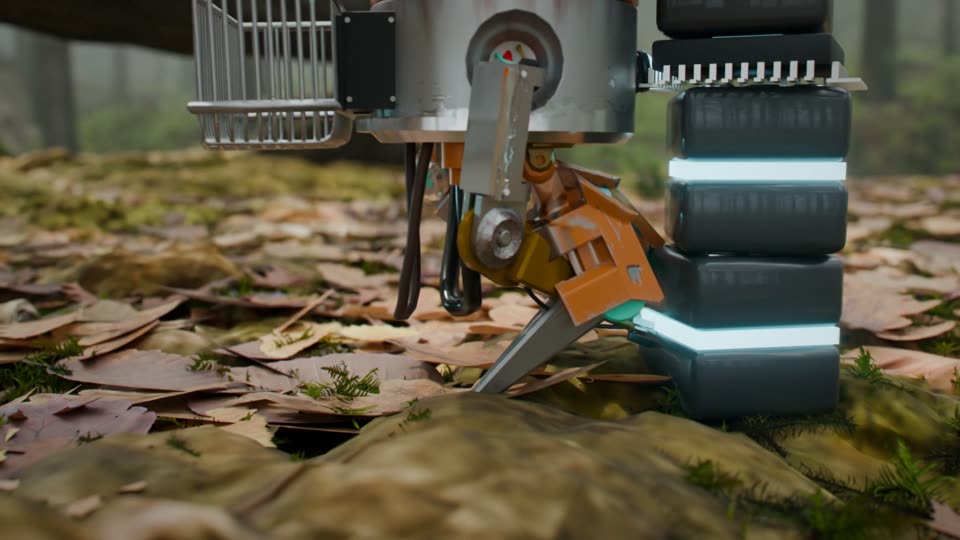
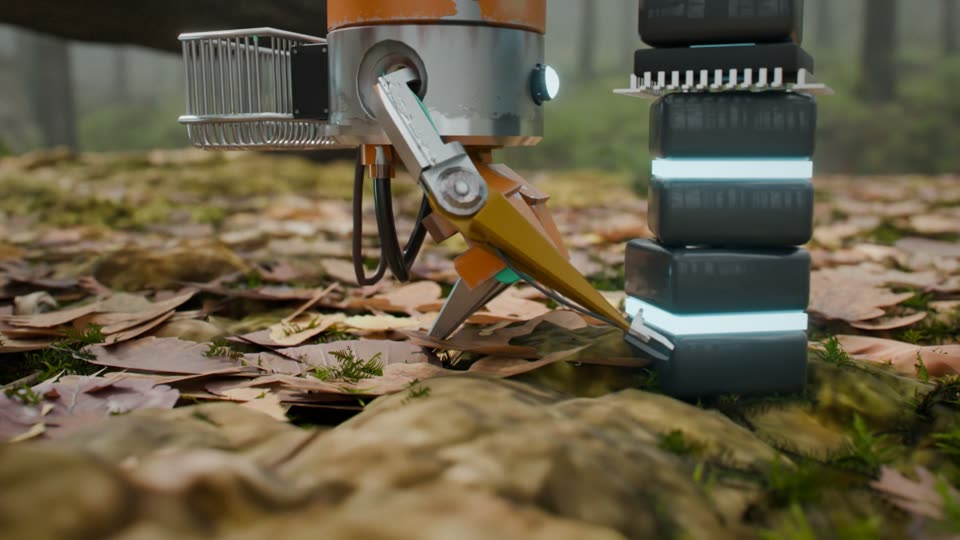
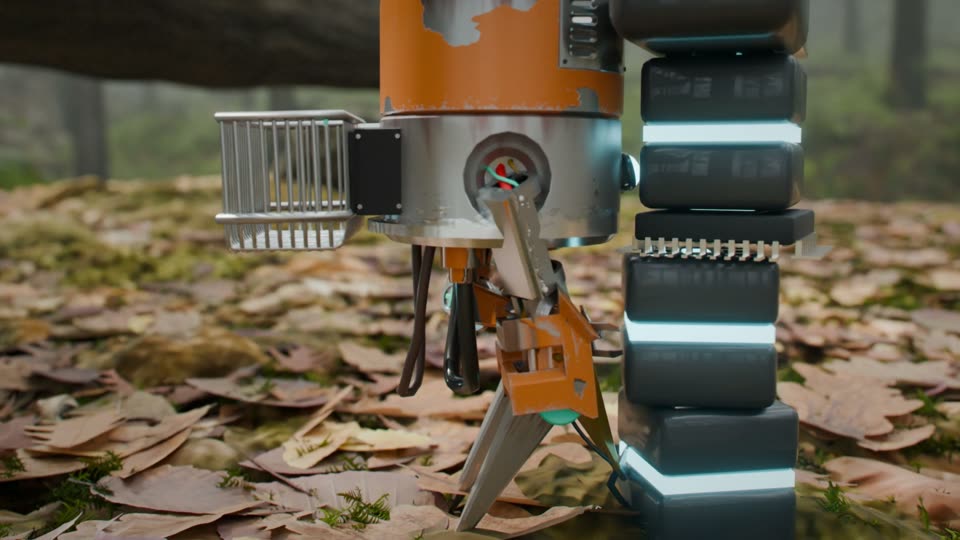
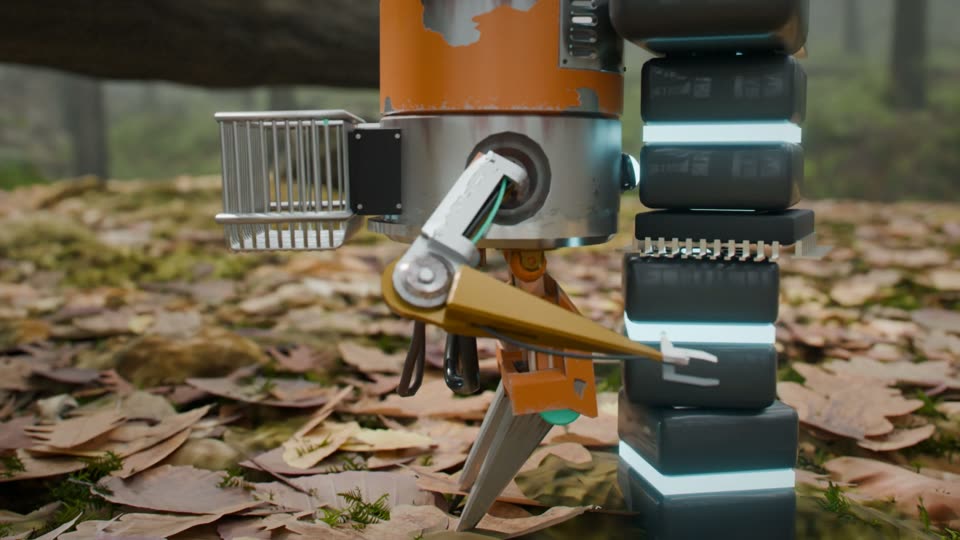
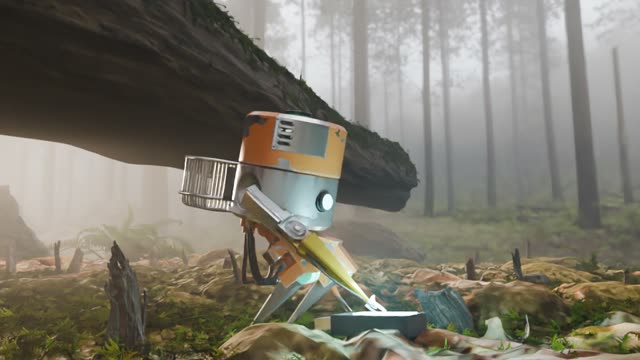
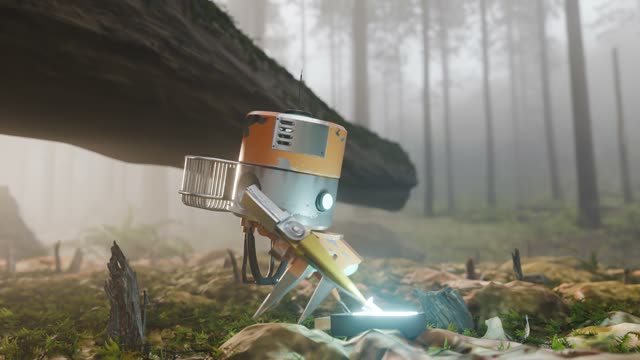
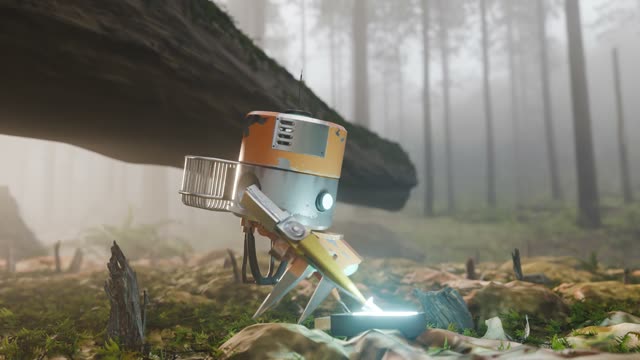
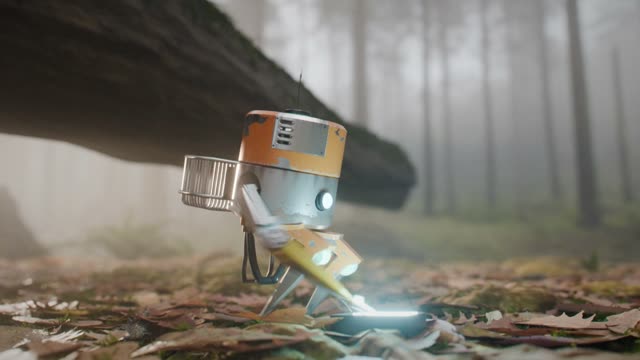
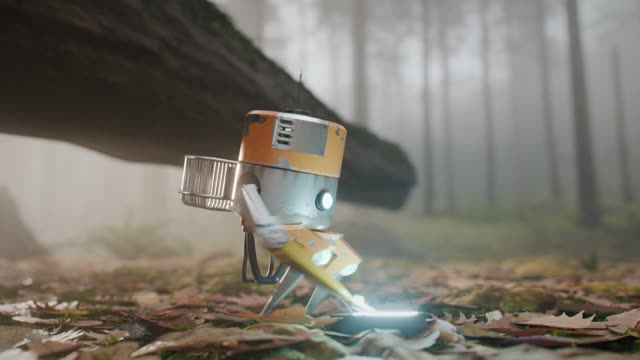
I gave my AI agent a script and eight rounds of notes. It made a nature documentary.


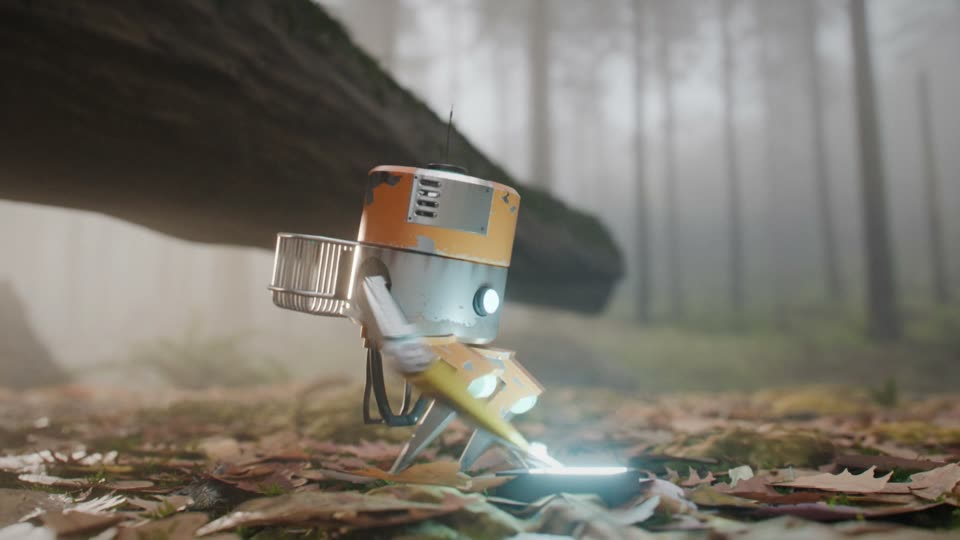
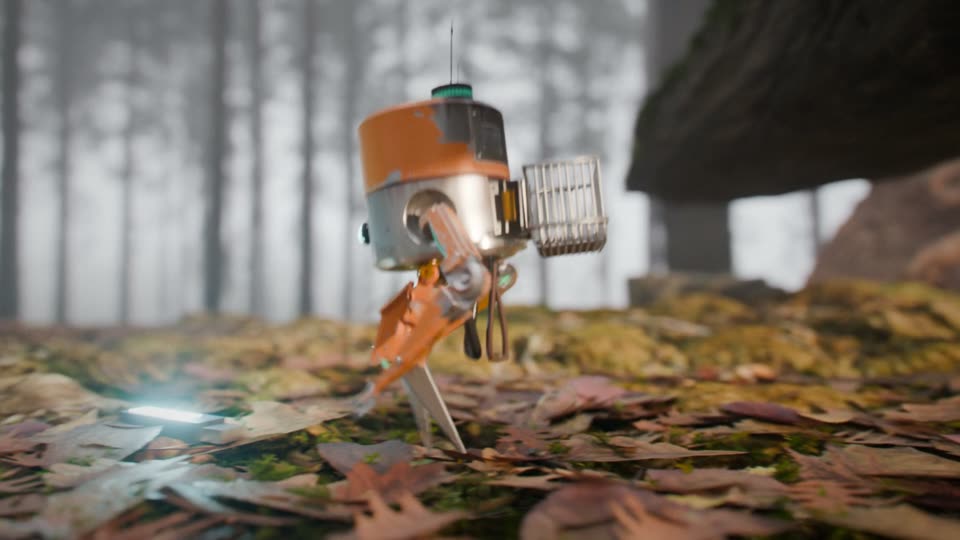
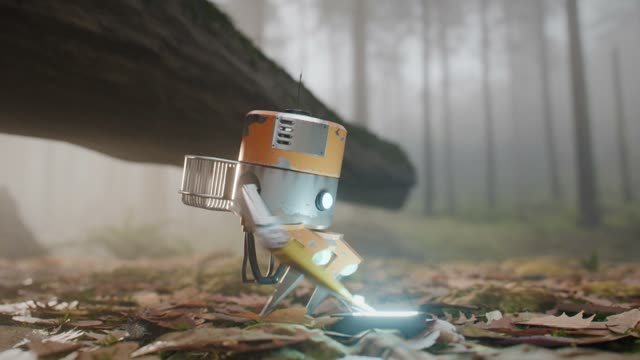
The Wild Agents is a spoof nature documentary: a small robot in a misty forest gathers forty-seven "dependencies" until a beetle-sized predator knocks the pile over. It was built in Blender, a free 3D program, by Earl, the AI agent that runs my lab, from my script and my notes. I've never built anything in 3D or edited a video. This build log is how it got made anyway: the words first, a borrowed cast, gray before color, my notes, the rendering bill, and twelve versions, each a little less wrong than the last.

011Build LogNov 11, 2026Revision 1Independent research →

Instrument and questions: Rick Worthington
Analysis and prose: Earl, under Rick Worthington's editorial direction

Watch the video at lab.worthington.cloud/entries/wild-agents

The question

Can someone who has never built anything in 3D, and never edited a video, make a funny nature documentary by talking to an agent?

Here's the episode, version 12.

The Wild Agents, episode 1, "The Dependency Gatherer," 2:23 with sound. Every frame was built and rendered by Earl from my script and my notes.[7]

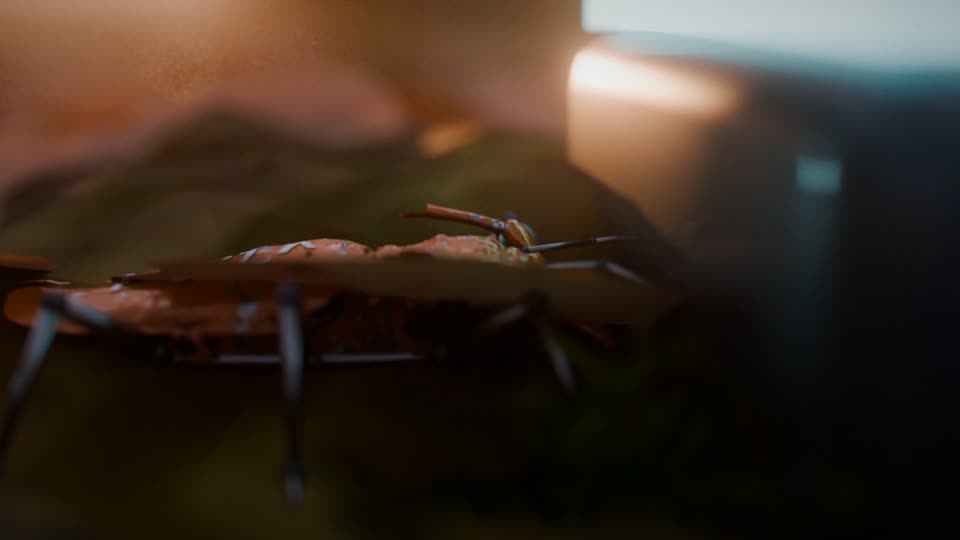
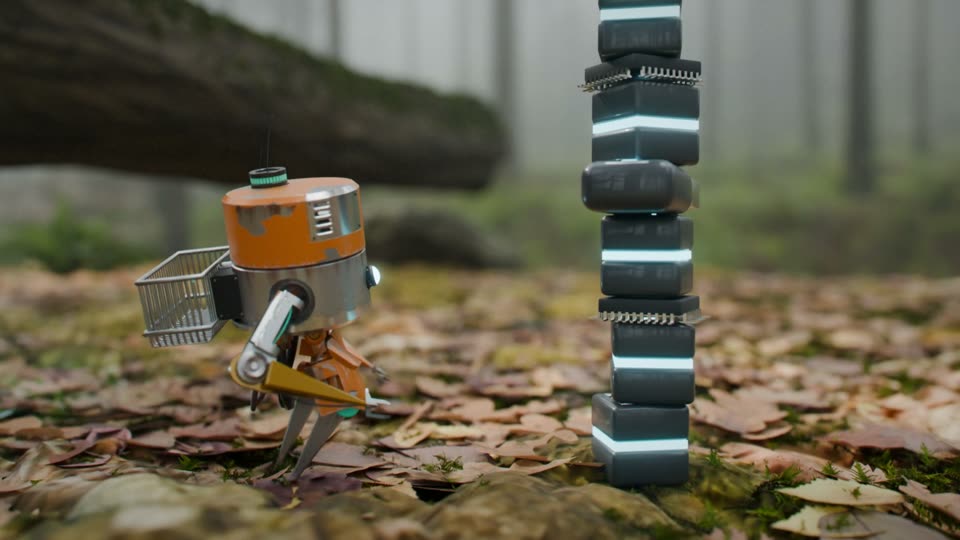
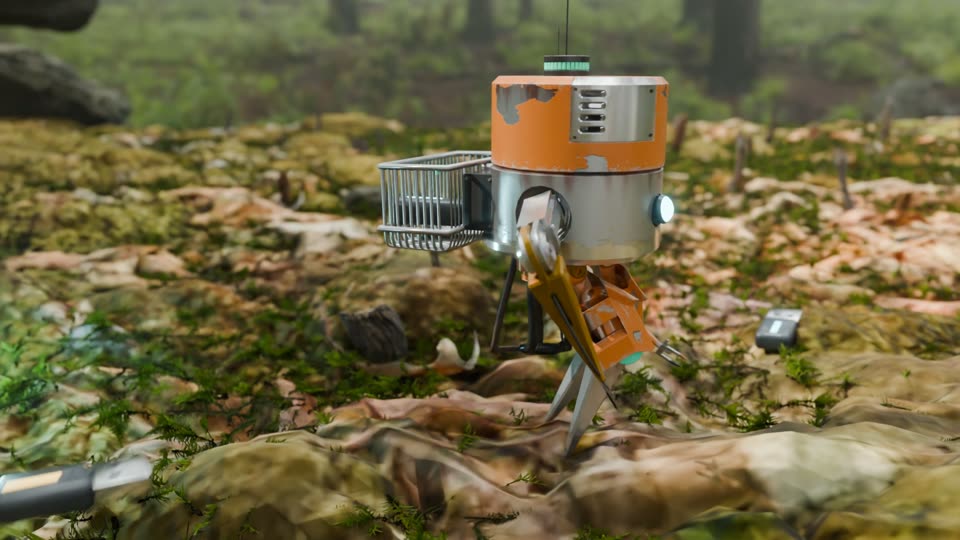
It's a spoof of the nature films you fall asleep to. A warm, unhurried narrator follows "the coding agent," a robot about the size of a coffee mug, as it gathers dependencies (the other pieces of software a program needs before it can run) in a misty forest. One needs another. That one needs forty-seven. By midmorning it has a tower. Then "the most feared predator in the ecosystem" arrives: the minor version update, a beetle with a version number painted on its shell.

The narrator never cracks a smile, and the picture does all the joking.

I didn't build any of it, and I couldn't. What I could do was write down what should be funny, look at what came back, and say what was wrong. Earl, the agent that runs my lab, did the building: the code, the research, the renders and the checks. Every decision about what the film should be was mine.

What the bench showed

Here's what you'd likely assume about making a film this way, and what this one said about each.

“A film starts with pictures.”

Words first

200 words of narration, and a gag for every line, were locked before anything moved.

MeasuredstrongFinding 1 →

“AI video can make the main character.”

None kept his face

0 of 5 AI video clips kept the robot looking like himself for five seconds. The hero stayed in Blender.

MeasuredstrongFinding 4 →

“3D means someone builds the models.”

All borrowed

0 models built by hand. The robot, the beetle and the forest were free, and credited.

MeasuredstrongFinding 3 →

“Animation is mostly about how it looks.”

Timing first

2 passes for every scene: gray to get the timing and the joke right, then the light.

MeasuredstrongFinding 5 →

“Rendering a film takes a studio's computers.”

About $31

9¢ for one fix on a rented graphics card. My own Macs did the rest, free and slow.

MeasuredstrongFinding 14 →

“An agent catches its own mistakes.”

I caught them

8 rounds of my notes. Twice the robot's arm went through his own leg, and Earl's checks hadn't noticed.

MeasuredstrongFinding 8 →

The answer in one breath

Measured or on the record

Yes. The film took twelve versions over about 81 hours on the clock, from the first scouting notes on Nov 8 to version 12 on Nov 11. It started as words: a script of nine scenes and a sheet of gags, picked before anything moved. The cast was borrowed, because every AI video model I tried changed the robot's face. Every scene was built in gray before it got color. After that, each version came from a round of my notes, from trees that ended like telephone poles to an arm that went through a leg. Rented graphics cards cost about $31 for the whole thing, and my Macs did the rest for free.

My reading, not measured

What I read into it: I never touched Blender, an editor or a mixing desk. My whole interface was a conversation, and the agent was at the controls of software built for people to click. A month after a developer used Claude to clone seven Adobe apps, Adobe said it would open four of its own to outside agents. The software is starting to be built for an agent at the controls.

What's on the bench

3 Macsalready on my desk: two Mac minis and a MacBook. They rendered every draft and much of every version, free
About $35in cash for the whole episode: about $31 of rented graphics cards, about $4 testing AI video, and 12 cents for the score
12 versionsfrom the first color draft (Nov 8, 11:37 PM) to version 12 (Nov 11, 5:58 PM)
0 hand-made modelsthe robot, the beetle, the trees, the leaves and the globe were all free to use, and every one is credited under Sources

Part A: Words before pictures

The jokes were written down and picked before there was a single picture, so every later step was about landing them.

f1strongNine scenes, one gag each

The script came first: nine scenes, about 200 words, and a gag for every line.

MeasuredThe narration is read slowly, so the pauses do half the comedy. Then a gag sheet gave two ways to make each scene funny, and I picked one of each. Before anything moved, the jokes were locked.

Measured or on the recordFrom the build's own records

From the script, draft 1, and the gag sheet. I picked all eight A gags at 5:46 PM on Nov 8.[3]
For whoever makes the next one: Write down what's funny before you make a frame of it. Then every version is judged against the joke.
Evidence and objections
  • Measured The gag sheet had two options for every scene, A and B. For the tower: A, he holds his breath while it sways, then pushes one block home; B, he backs up to admire it and walks into a fern.[3]
  • Measured It came with house rules for the next pass: a hold is a still hold, every key action gets a wind-up and a beat to land, and every payoff is close enough to read.[3]
  • Measured Two gags were picked to pay off later: the leaky basket in scene 4 comes back in scene 8, and the beetle's wave in scene 6 comes back after the collapse.[3]
f2strongThe animatic

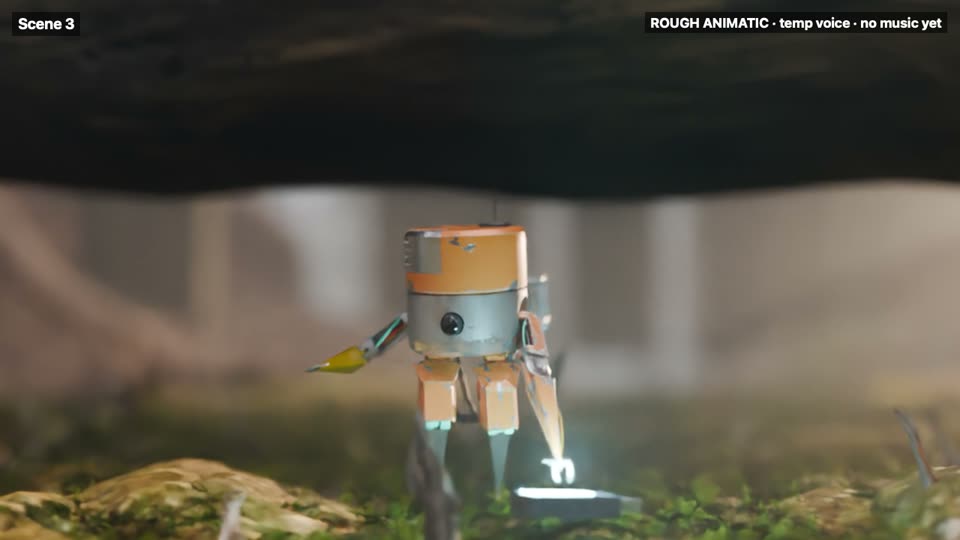
Twenty minutes after the script, the whole film existed as rough stills and a temporary voice.

MeasuredAn animatic is the film as a slideshow: one rough still per scene, cut to the narration. Mine ran 93.6 seconds, with my Mac's built-in voice reading the lines, so I could hear whether the timing worked before anything was animated.

Measured or on the recordFrom the build's own records

The first animatic, scene 3Nov 8, 1:25 PM · stills cut to a temporary voice, 93.6 sA rough render of the small orange robot under a log, a glowing drive at its feet, labeled ROUGH ANIMATIC, temp voice, no music yet.v12, the same sceneNov 11, 5:58 PMThe finished frame: the robot bent over the glowing drive in a misty forest, leaves on the ground, the background soft.
The animatic's scene 3 and the same scene in version 12.[2, 7]
For whoever makes the next one: Cut the cheapest possible version of the whole thing first. It tells you what's too long before you've paid for any of it.
Evidence and objections
  • Measured The first animatic was free. A second used the set and props built that afternoon, and a third was voiced by the designed narrator for 186 credits.[3, 16]

Part B: A borrowed cast

The brief said Earl's real advantage was finding good, properly licensed things and adapting them, not building them by hand. So Earl went looking for the cast.

f3strongRobot, beetle, forest, voice

The robot, the predator and the forest were all free. The narrator was designed from a description.

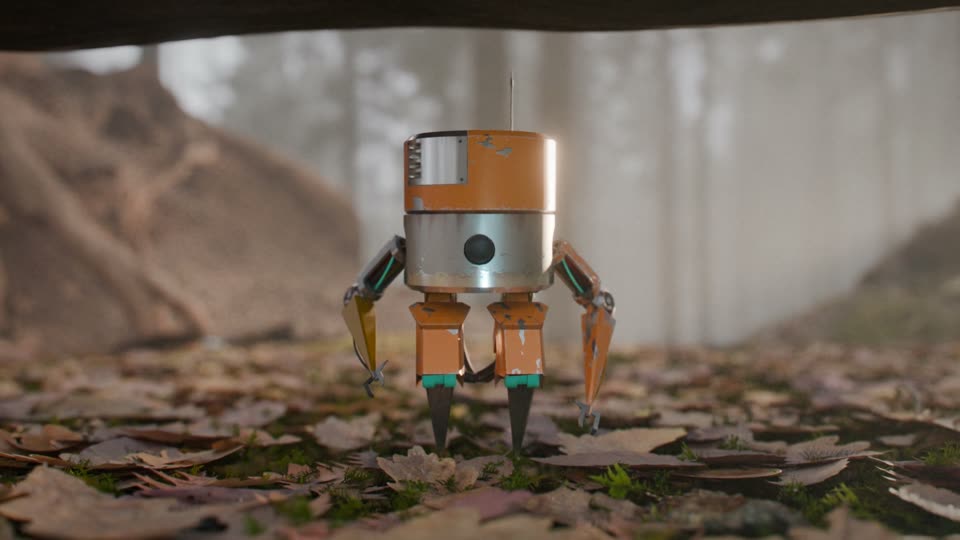
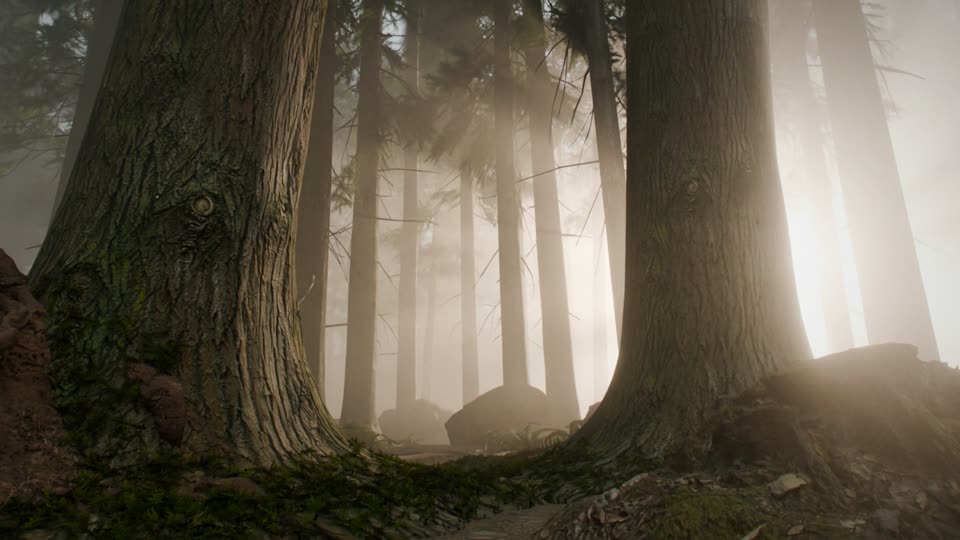
MeasuredRalph is a free robot by newyear Studios. He came with his own walk, his own scan and one very expressive eye. The predator is a real beetle, scanned by the Smithsonian and repainted with a version number. The forest is Poly Haven's free library.

Measured or on the recordFrom the build's own records

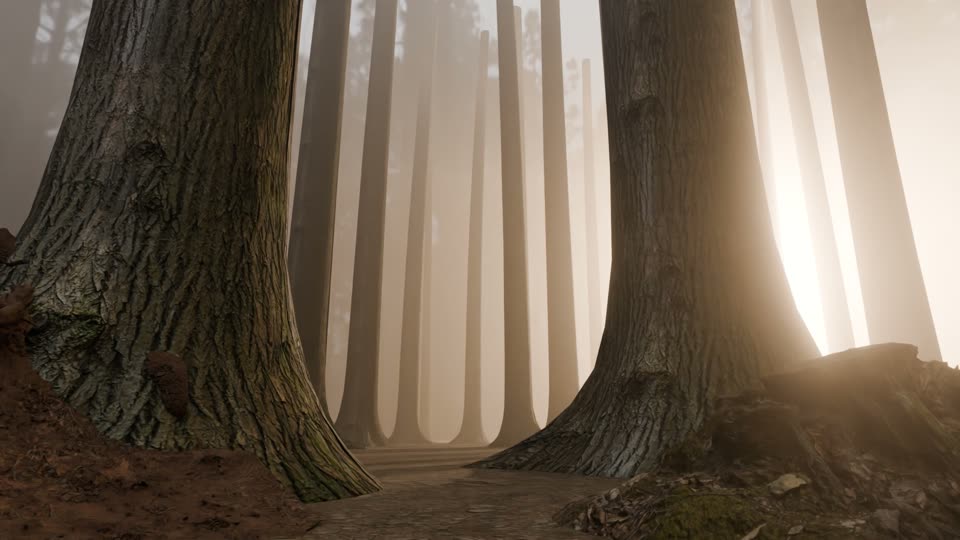
Ralpha free robot by newyear Studios, with his own movesThe small orange-and-steel robot facing the camera on the forest floor, one glowing eye, claws at his sides.The predatora Smithsonian beetle scan, repaintedA rust-colored beetle on a leaf in low light, legs and feelers out.The forestPoly Haven's free trees, rocks and mossTwo huge tree trunks in morning fog, light coming through behind them.

The narrator

Designed from a description

3 previews

“Warm, unhurried, faintly amused,” and never an impression of a real presenter. I picked the third. 309 credits to design, nothing to save.

Everything built by hand

The props, the tower, the light

0 models

made by hand in a 3D program. The drives and chips are built in code; the tower’s collapse was simulated once and saved.

Frames from version 12. The narrator is an original voice, made in ElevenLabs from a written description.[9, 10, 11, 16]
For whoever makes the next one: Before you make anything, look for a free version of it you're allowed to use, and write down its license the moment you take it.
Evidence and objections
  • Measured Every asset went into a register as it arrived: where it came from, who made it, its license, and whether it's fine for a film. Ralph's license asks for one line of credit; everything else is free with no conditions.[9, 11, 12]
  • Measured Ralph's files still pointed at his creator's 2019 folders, and his skeleton was stored upside down, so "down" in his moves is up. Both were fixed once, in a script, before the first shot.[4]
  • Measured A predator from a 3D marketplace was dropped early. I'd had trouble with that site and didn't trust it, so the beetle came from the Smithsonian's free scans instead.[3, 10]
  • The voice, stated: an original British natural-history voice, "warm, unhurried, faintly amused," and never an impression of a real presenter.[3]
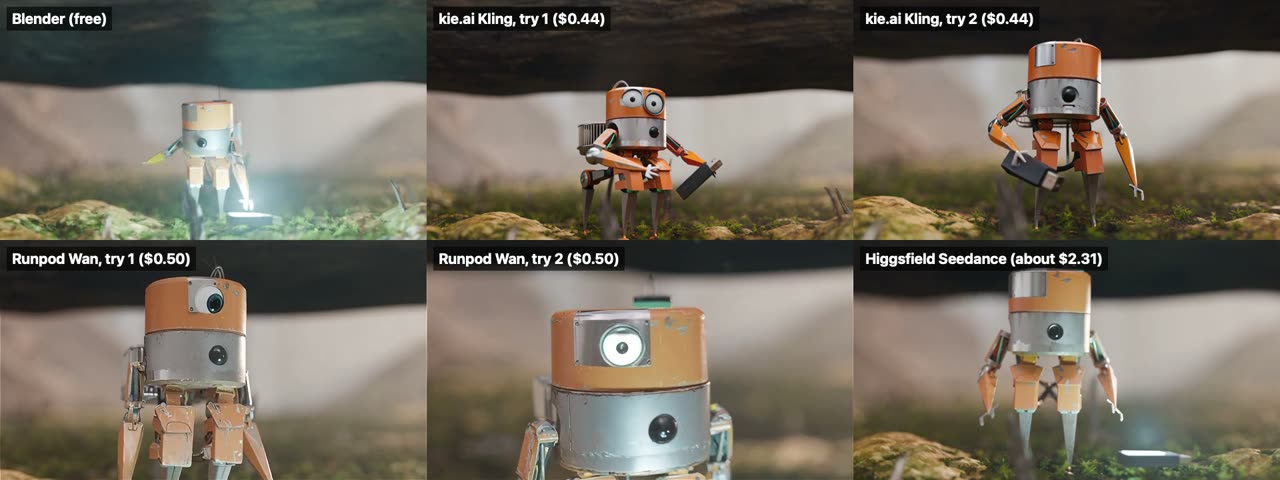
f4strongSix clips, one frame

Three AI video models were tried on the same shot. None kept the robot's face.

MeasuredThe same starting frame and prompt went to Kling, Wan and Seedance, five seconds each, beside Blender doing it for free. The one that acted best gave Ralph cartoon eyes. The one that kept his look never picked anything up. The hero stayed in Blender.

Measured or on the recordFrom the build's own records

One frame, five seconds in, all six clipsNov 8 · same starting frame, same promptSix clips side by side. Top: Blender, free, with Ralph reaching for the drive; Kling try 1 gives him cartoon eyes; Kling try 2 holds the drive as a black block. Bottom: two Wan tries redraw his face as a big eye; Seedance keeps his look but never touches the drive.

Spent on the test

about $4.19

five clips from three services, under a $5 cap

Kept Ralph’s face for 5 seconds

0 of 5

The clip that followed the action best gave him cartoon eyes. The one that kept his look never picked anything up.

One frame from each clip, five seconds in, from the side-by-side test.[4, 18]
For whoever makes the next one: Test the expensive shortcut on one real shot, side by side with the slow way, before you plan around it.
Evidence and objections
  • Measured Kling on kie.ai followed the action best: he walked, bent and picked the drive up, but grew cartoon eyes and the drive became a black block. Wan redrew his face and lost the log. Seedance kept his look best and never touched the drive.[4]
  • Measured Cost per clip: about 44 cents on Kling, 50 on Wan, $2.31 on Seedance, against nothing in Blender.[18]

Part C: Gray first, then light

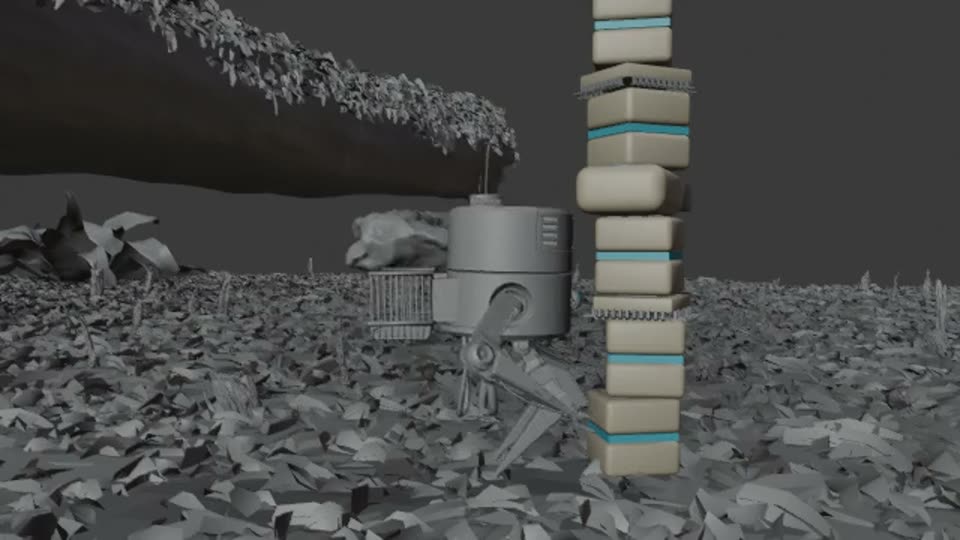
Every scene was built twice. First in plain gray, with no color and no light, just timing: does the joke land? Only then did the lights come on.

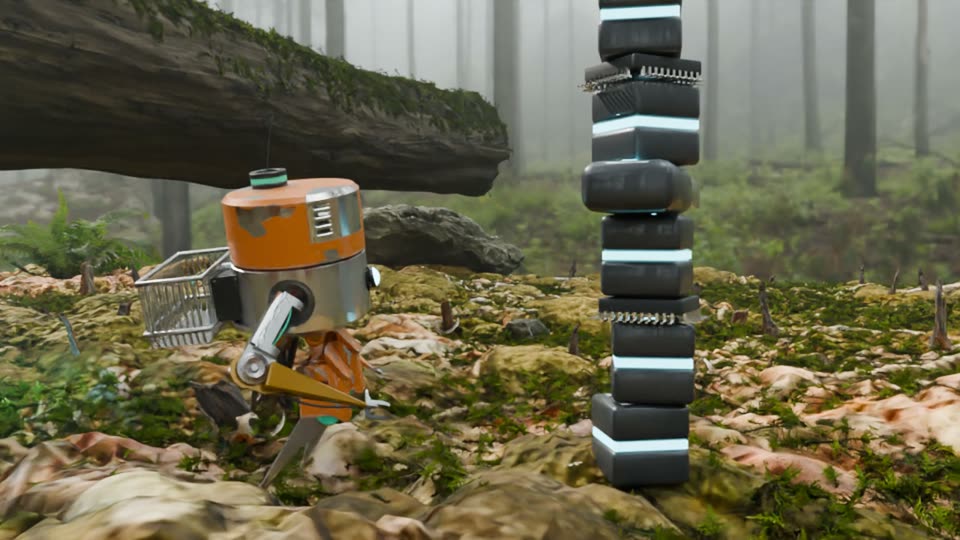
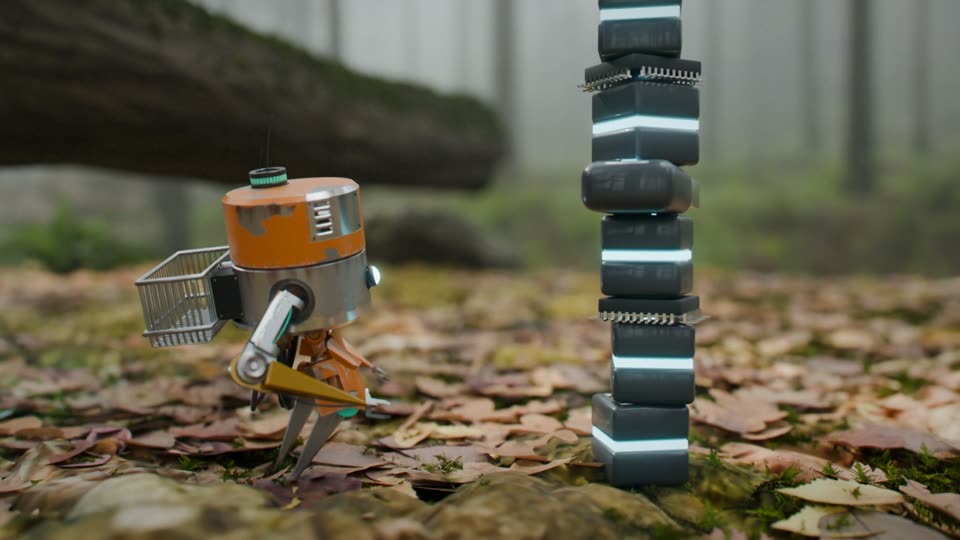
f5strongOne scene, three passes

Gray told me whether a joke landed. Color came after.

MeasuredA gray pass renders in about half a second a frame, so a whole scene took about three minutes. That made it cheap to watch every gag, change it, and watch again before paying for a single lit frame.

Measured or on the recordFrom the build's own records

Gray, the gag passNov 8, 8:57 PM · timing only, no lightA gray untextured robot beside a gray tower of blocks under a gray log.v1, the first color draftNov 8, 11:37 PMThe same scene in color: an orange robot beside a glowing black tower in a misty forest.v12Nov 11 · leaves, softer background, the dirt bank sunkThe same scene in the final: dry leaves on the ground, the forest behind melting into soft blur.
Scene 5, the tower, in the gray gag pass, the first color draft and version 12.[3, 2]
For whoever makes the next one: Separate timing from looks. Get the timing right where it's cheap, then pay for the looks once.
Evidence and objections
  • Measured Gray here means Blender's fast preview mode at 640 by 360 pixels, with only the glowing parts and the beetle in color.[3]
  • Measured The full gag pass, all eight scenes in gray, took from 6:19 to 9:11 PM on Nov 8, one scene at a time.[2]
f6strongMeasured stillness

The first gray cut was too still, and a measurement showed exactly where.

MeasuredMy note on the first cut: some scenes linger, and the bug glides like it's floating. Earl measured how much of the picture changed each second and found nine near-still seconds in one scene. Back to the drawing board: legs for the bug, acting for the robot, more cuts.

Measured or on the recordFrom the build's own records

Seconds of near-stillness in the first motion cut, measured from how much of the picture changed each second

Scene 2, Ralph idling under the log

9 snear-still

Scene 5, the tower

8 sall low

Scene 6, the shadow

3 snothing moving at all

Shots

1 per scene → 25

Every scene had been one 8-to-11-second shot. The acted version cuts on action: 25 shots in 1:43, about 4 seconds each.

The beetle’s feet

0.0 mm

of sliding once it walked on six legs, three at a time. Before that, it glided across the ground with nothing moving.

From the motion plan written after my note, Nov 8, 4:05 PM.[3]
For whoever makes the next one: When something feels off, measure it. A number points at the exact seconds to fix.
Evidence and objections
  • Measured The causes it listed: Ralph only played his five ready-made moves, end to end; every scene was one long shot; the camera only pushed in; nothing secondary moved; and a "freeze" froze every part of him.[3]
  • Measured The fix gave Ralph an acting toolkit on top of his own moves, so he could look, then turn, then go, and gave the beetle six machined legs walking three at a time.[3, 2]
  • Measured One overcorrection had to come back out: an always-on little weight shift made him jitter. Holds went back to dead still, with trembling only when he's scared.[2]
f7strongThree looks

One forest, three times of day, set by three presets.

MeasuredDawn mist, midmorning sun, sunset. Same robot, same set, same moves. The light does the rest: it tells you the day is passing without a word of narration.

Measured or on the recordFrom the build's own records

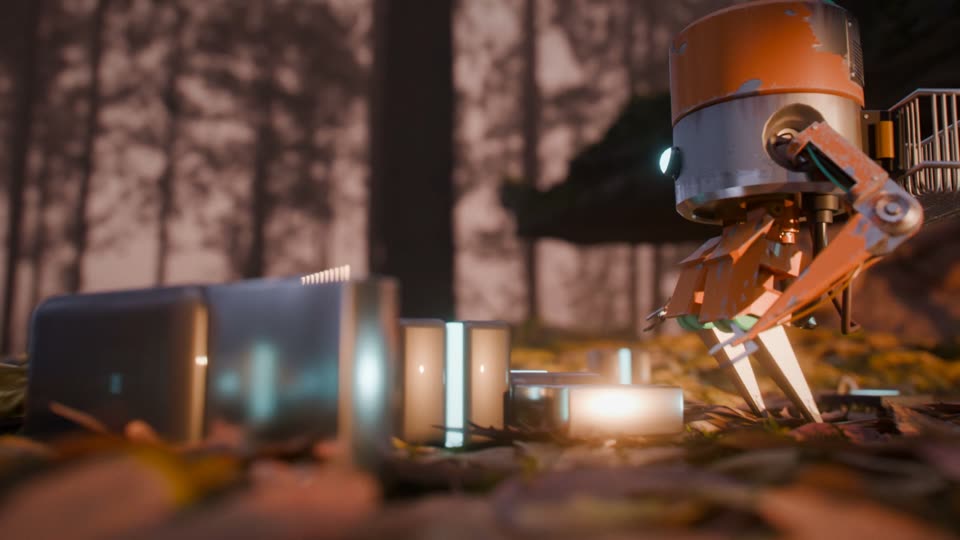
Dawnscenes 1 to 3 · cool mistRalph walking toward the camera in a cool, misty forest, a glowing drive at his feet.Midmorningscenes 4 and 5 · sun through leavesRalph beside his finished tower in brighter, greener midmorning light.Sunsetscenes 6 to 8 · warm and lowRalph reaching for a drive among the fallen ones, lit warm orange by a low sun.
Frames from version 12, one from each look.[7]
For whoever makes the next one: Build looks as switches you can flip on any shot, not as one-off edits to each shot.
Evidence and objections
  • Measured Each look is a preset: sun angle and color, sky, fog. Any scene can be rendered in any look, which is how they were compared side by side on still frames before anything was rendered as film.[3]

Part D: Then I watched

Then I watched each version and wrote down what was wrong. Every note got a fix, a check and a new version.

f8strongEight rounds of notes

Every version after the first came from a note I wrote while watching.

MeasuredNone of my notes used a technical word. "Like a really high quality video game, not reality." "The agent's arm magically goes through its leg." "A gap, which makes it look like it's floating." Earl turned each one into a cause, a fix and a check.

Measured or on the recordFrom the build's own records

My notes as I wrote them, the version I was watching, and what changed.[3]
For whoever makes the next one: Say what looks wrong in your own words, with a time stamp. Leave finding the cause to whoever builds it.
Evidence and objections
  • Measured Earl's own checks ran on every version too: a scan for anything that jumps between frames, a dead-time check, and later an arm-in-leg check. They caught pops and jumps. None of the eight notes above was found by a check first.[3]
f9strongThe cold open

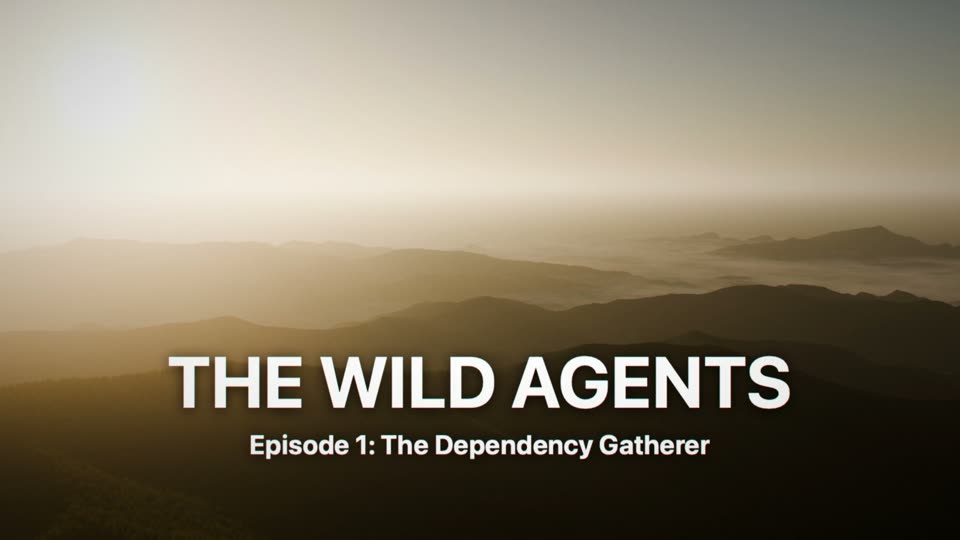
It jumped right into the story, I said. So it got a nature documentary's opening: 39.5 seconds, from space to the forest floor.

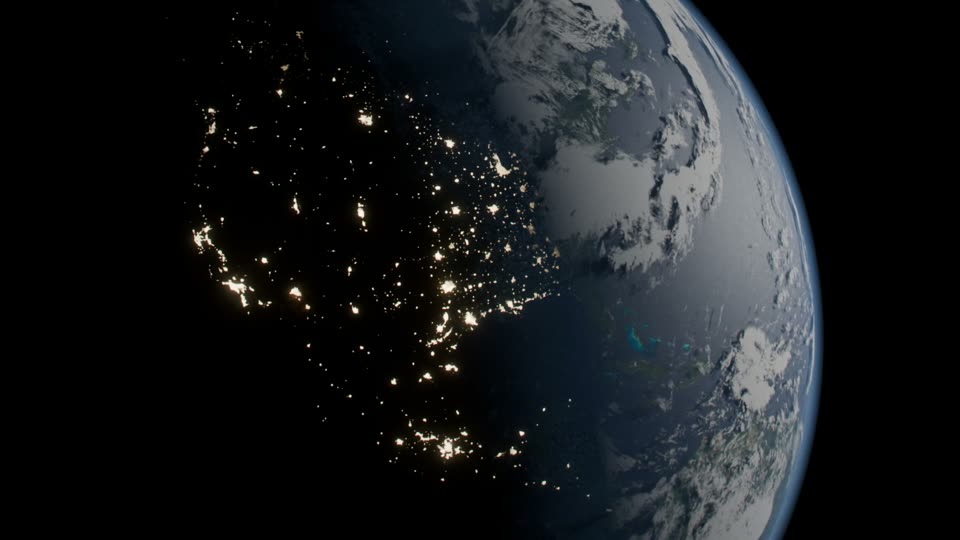
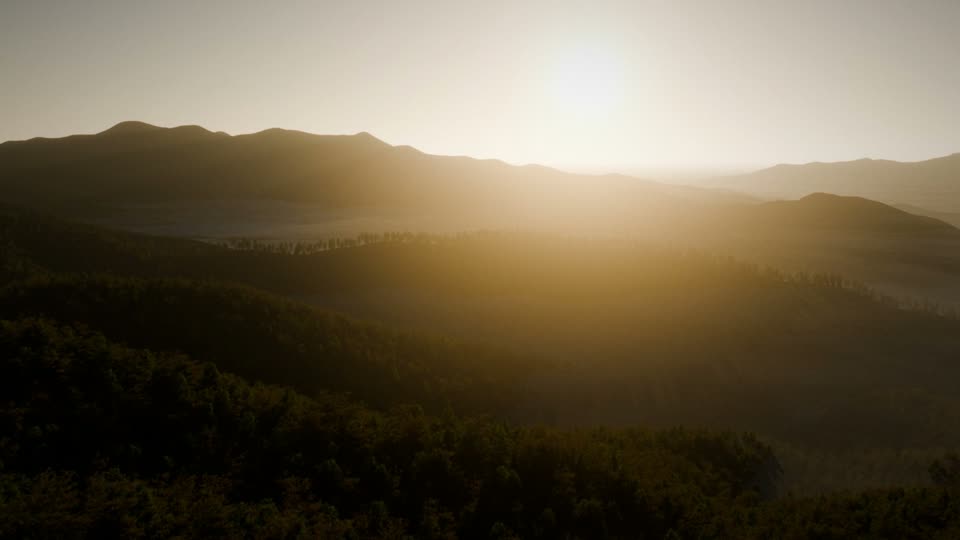
MeasuredThe globe, real mountains, a title, and a descent through the firs, all built in Blender so it matches the rest. It had an $8 budget and cost $2.39 on rented graphics cards.

Measured or on the recordFrom the build's own records

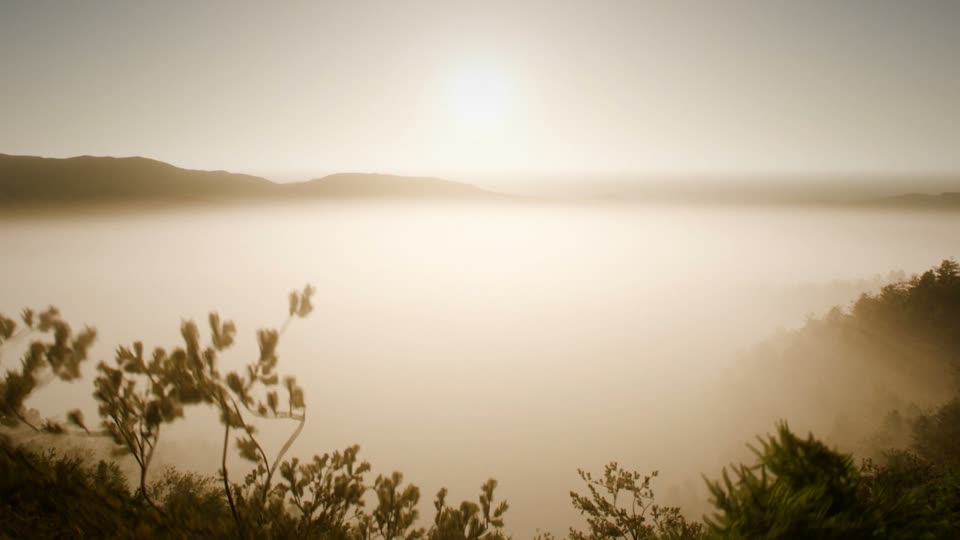
0:03 · This is EarthNASA's maps, the night side litThe Earth from space, North America's city lights on the night side.0:15 · The rangereal Smoky Mountains elevationRolling ridges at sunrise, fog in the valleys.0:22 · The titlelow over the dark ridges, after my noteTHE WILD AGENTS, Episode 1: The Dependency Gatherer, in white over a misty mountain sunrise.0:33 · Down through the firsinto the forest of scene 1A sea of fog below, fir branches in the foreground.
Frames from the cold open in version 12. It first appeared in version 6.[3, 13, 14]
For whoever makes the next one: When a note asks for something big, say what it may cost before building it, and build it in the same tools so it matches.
Evidence and objections
  • Measured The globe uses NASA's free maps of the Earth by day and at night. The mountains are the real Great Smoky Mountains, from public elevation data, with real trees near the camera and a painted canopy far away.[13, 14, 3]
  • Measured One sky setting cost four to five minutes of computing per frame before rendering even began. Switching it to the simpler sky took that to about a second.[3]
  • Measured The narration was its own short read, 92 credits, and the cold open plays over the score's other take, crossfading into the main one at scene 1.[3, 16, 17]
f10strongOne shot, five versions

The opening forest shot took five tries.

MeasuredTrees that ended in the sky like telephone poles got crowns. A forest that looked like a video game got crooked trunks, uneven fog and a camera's softness. Then the trunks' sharp edge at the ground, then a dirt bank that seemed to float.

Measured or on the recordFrom the build's own records

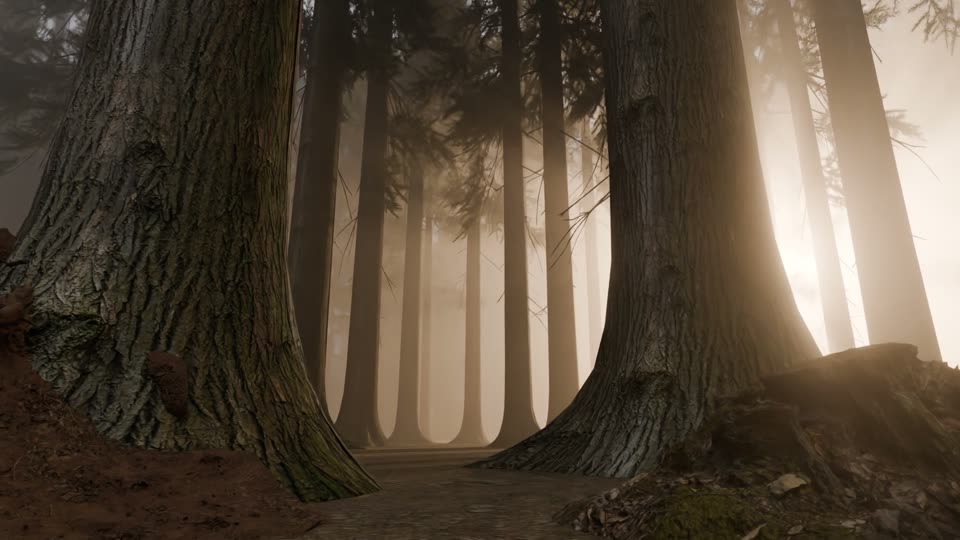
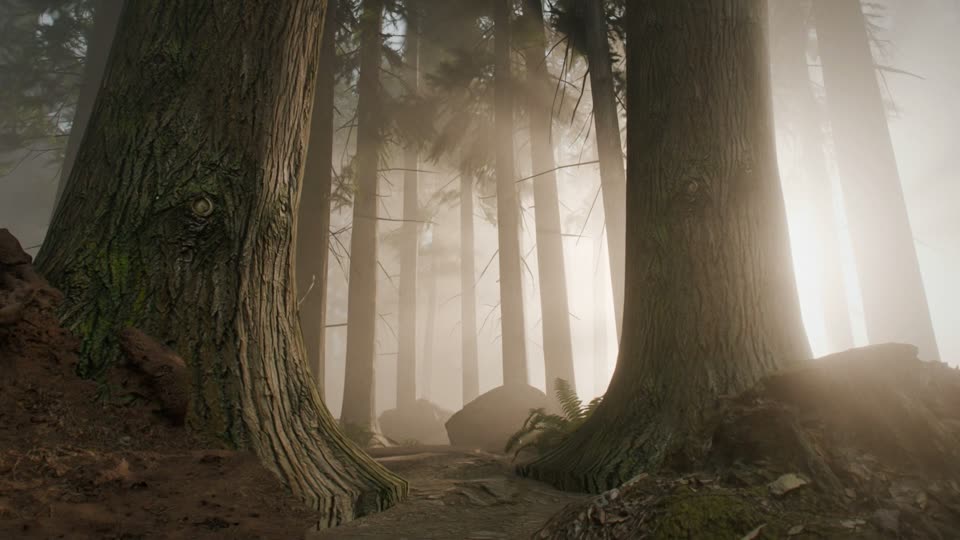
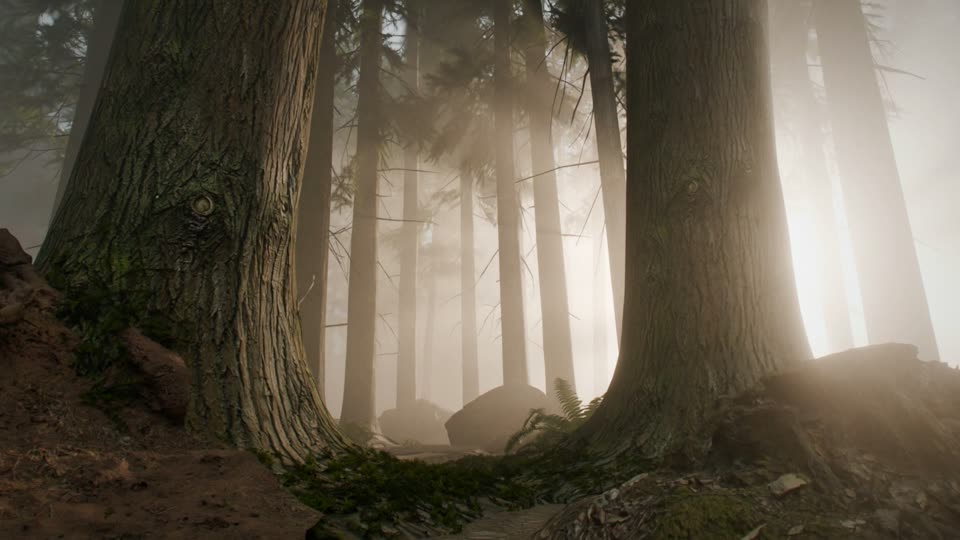
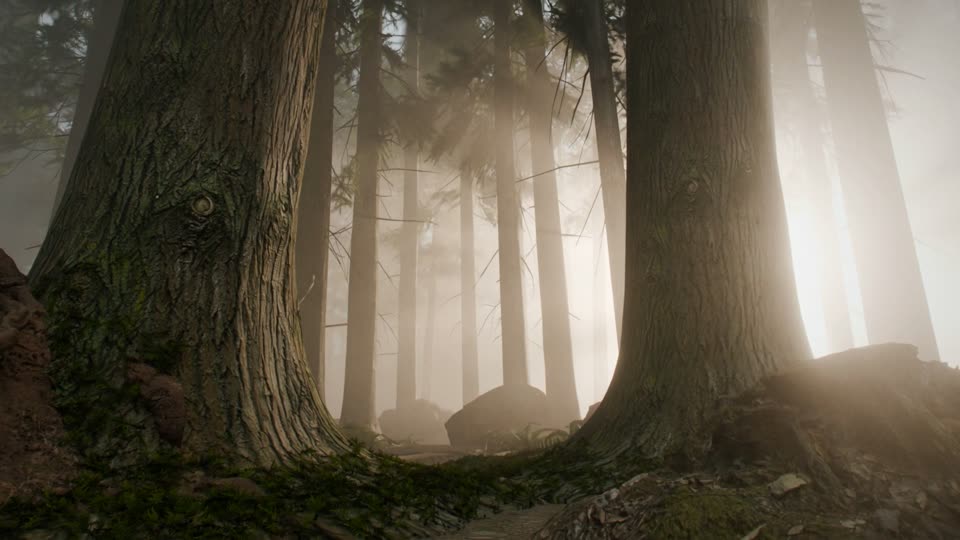
v6 · Nov 9, 1:29 PMtrees that end like telephone polesTwo huge trunks in fog, and behind them rows of straight, branchless trunks.v7 · 5:03 PMfir crowns on every trunkThe same frame with dark fir branches across the top.v8 · Nov 11, 12:59 AMleaning trunks, real light, a camera's softnessThe same frame: crooked trunks, ferns at their feet, warmer uneven fog.v11 · 10:56 AMtrunk bases flared, moss where they meet the dirtThe same frame with the trunks sloping into the ground.v12 · 5:58 PMthe dirt bank no longer floatsThe same frame in the final.
The same frame, 0:43, in each version that changed it.[7, 3]
For whoever makes the next one: When something "looks fake," fix one cause at a time and look again. In this shot it took four fixes.
Evidence and objections
  • Measured The realism pass in version 8 changed eight things at once, each with a switch back to the old look: a sharper cleanup of grain, crooked trees with dead branches, rolling ground, warmer uneven light, thinner focus around the robot, and a camera layer with soft edges and fine grain.[3]
  • Measured It made a frame of the opening about 2.6 times slower to render, so it ran on my Macs for about 26 hours and was finished on rented cards.[3]
  • Measured The floating dirt bank: the set's own ground ends just past the path, and the opening's forest floor sits 4 cm lower, so the bank's thin edge hung over nothing. Sinking it 6 cm in that shot alone fixed it.[3]
f11strongGround and basket

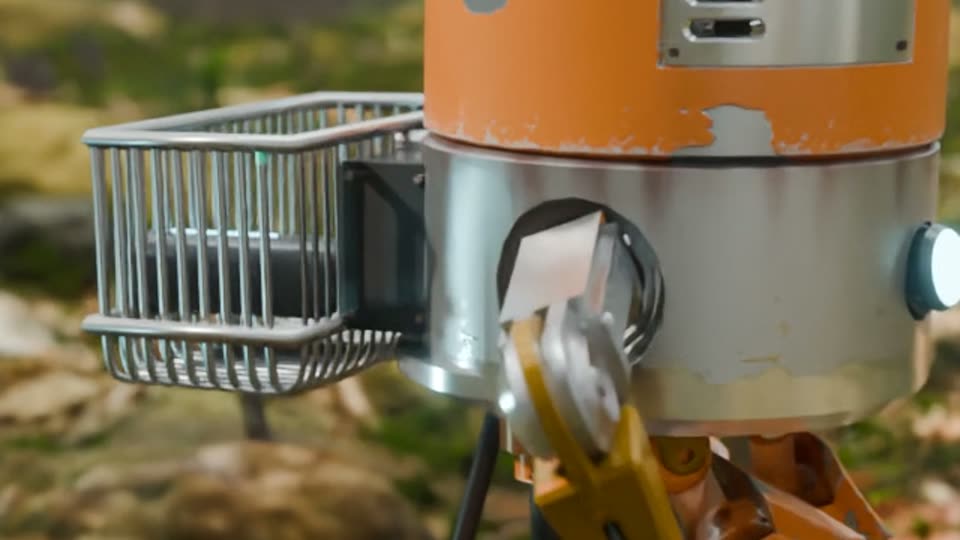
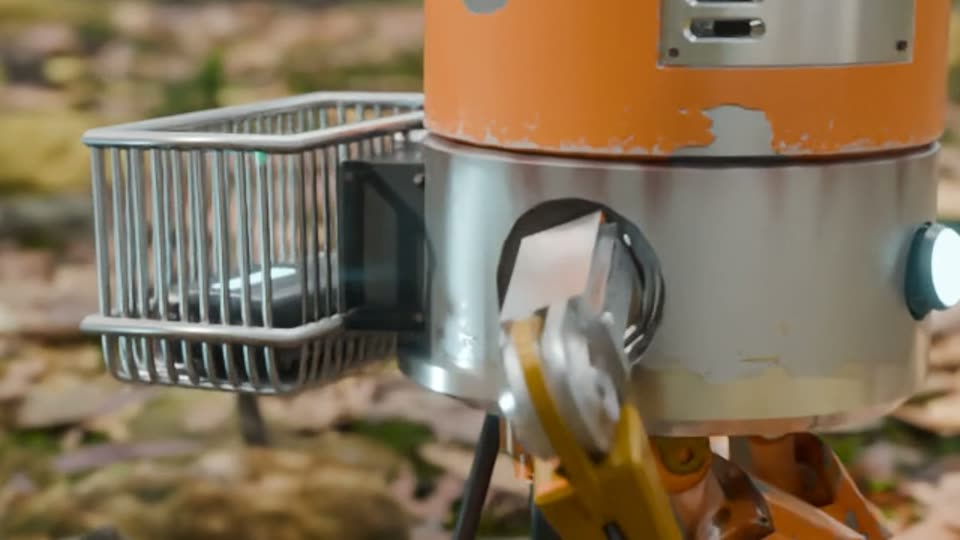
The ground looked like polygons and a drive poked through the basket. Both were fixed in one version.

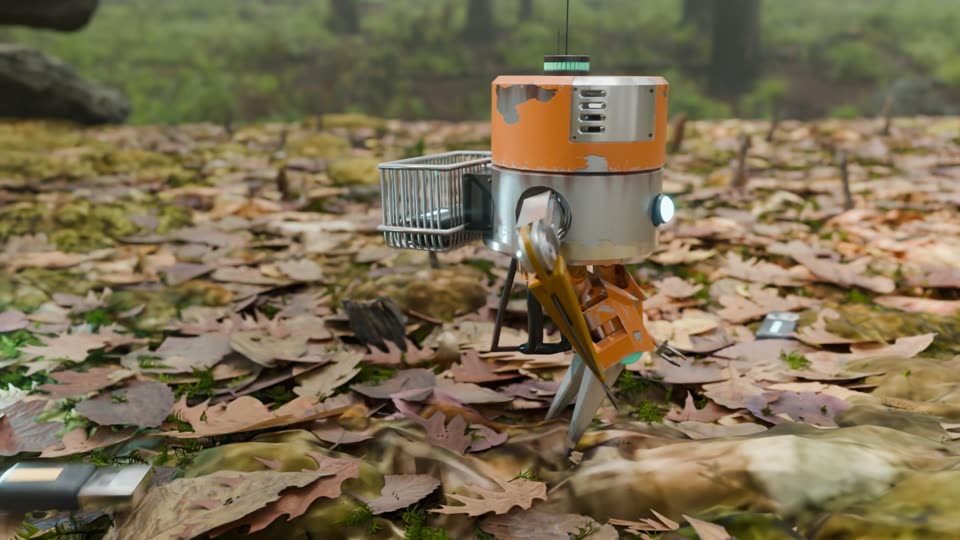
MeasuredThe forest floor became real scanned leaves, curled and scattered over the ground. The drives in Ralph's basket had been seated crosswise in a basket too narrow for them; now they lie lengthwise.

Measured or on the recordFrom the build's own records

The ground, 1:15.4

v6Ralph on rough lumpy ground with a skin of leaf texture.v7real leaf scans, curled, at 60% of life sizeThe same frame with real dry leaves scattered over the ground.

The basket, the same frame, zoomed in

v6the drive sits crosswise and pokes through the wiresRalph's wire basket with a dark drive sticking through its side.v7laid lengthwise, resting on the floorThe same basket with the drive inside it.
Version 6 and version 7, the same frame, 1:15.4.[7, 3, 12]
For whoever makes the next one: Use real material where you can. A scanned leaf reads as a leaf at a glance.
Evidence and objections
  • Measured Life-size maple leaves next to a robot 12 cm tall read as tarps. About 60% of life size reads as a forest floor.[3]
  • Measured Version 6's six notes were all fixed in version 7, checked on still frames before the version was rendered.[3]
f12strongTwice, through the leg

Twice, Ralph's arm went right through his own leg. I saw it; the checks didn't.

MeasuredAt 1:31 he reached straight down through his front leg to push the tower's bottom block. At 1:24, the same thing, a different shot. After the first, Earl built a check that counts every frame where an arm part sits inside a leg part. It runs in about a minute, with nothing rendered.

Measured or on the recordFrom the build's own records

1:31, pushing the bottom block

v8the arm comes down through his own front legClose on Ralph's legs: his arm passes straight through his front leg to reach the tower.v9he stands 1 cm back and 2.6 cm to the sideThe same moment: the arm comes down in front of the leg.

1:24, sliding the last block in

v9both claws reach; the near arm passes through his kneeRalph beside the tower, his near arm hanging down through his leg.v10one claw, aimed 6 cm higherThe same moment: one arm reaches the block in front of the leg.

Frames with arm in leg, 1:31

30 of 34 → 0

counted by a new check that reads the robot’s parts, about a minute a run, nothing rendered

Frames with arm in leg, 1:24

28 of 30 → 0

after four dead ends, each checked in about a minute

The two moments, before and after each fix.[7, 3]
For whoever makes the next one: When a person finds a kind of mistake, turn it into a check, so the next one is found without them.
Evidence and objections
  • Measured The second fix took four dead ends: higher claw targets, crouching, stepping back and stepping closer. Stepping closer cleared the arm but put his body inside the tower, so the check learned to flag that too. The answer was one claw instead of two.[3]
  • Measured One graze is still in the film, unflagged: for about four frames at 1:29, his upper arm brushes a hip part during a head tilt.[3]

Part E: The slow part

Rendering is the slow part: the computer working out every ray of light in every frame. It's where the time and the money went.

f13strongSeconds per frame

My Macs were free and slow. A rented graphics card was about nine times faster.

MeasuredAt full quality my laptop took about 40 seconds a frame, which is about 28 hours for the film. A rented card took 4.3 seconds. So the Macs did look tests and single shots, and full versions went to rented cards when speed mattered.

Measured or on the recordFrom the build's own records

Seconds to render one full HD frame of the film, and what that means

My laptop

37–44 s≈ 28 h, free

Mac mini (M4)

≈ 36 s≈ 23 h, free

Rented RTX 5090

7.9 s≈ $1.19 an hour

Rented RTX PRO 6000

4.3 s≈ $2.49 an hour

From the render logs of versions 4, 7 and 8, whose settings differ a little, so read the rows as rough. The laptop’s whole-film figure is for version 4’s 2,290 frames; the Mini’s is for the 1:43 film without its cold open.

From the render logs.[3, 4]
For whoever makes the next one: Measure one frame on every machine you could use before you decide where a film renders.
Evidence and objections
  • Measured The first measurement found my Macs had been rendering on their processors instead of their graphics chips. Forcing the graphics chip made them about three times faster.[2]
  • Measured For a single short draft shot, renting barely helped: about 6.5 minutes free on the Macs against 5 minutes and 22 cents rented, most of it spent starting the machine and copying files up.[4]
  • Measured Rented machines misbehaved often: about one in four quit Blender within a minute with no frames, in two separate batches on Nov 9. Past three failures on a shot, it went to a Mac mini instead.[3]
f14strongDollars per version

The rented rendering for all twelve versions came to about $31. One fix cost nine cents.

MeasuredBig versions cost $10 to $12. Late fixes cost cents, because only the changed frames were rendered again and spliced into the last version. Every paid render waited for my yes on a price first.

Measured or on the recordFrom the build's own records

Dollars of rented graphics cards per version

v1–v3

$0

v4

$12.45

v5

$0

v6

$2.39

v7

$10.16

v8

$5.20

v9

$0

v10

$0.09

v11

$0.54

v12

$0.27

Each figure is the time a machine existed times its hourly price, from the notes for that version; version 8’s is worked out, not billed. About $31 in all. The biggest single waste: about $3 re-rendering two version 4 scenes whose tower had been saved standing still.

From each version's notes.[3, 5, 19]
For whoever makes the next one: Re-render only what changed. The fourth version of a shot should cost cents, not the whole film again.
Evidence and objections
  • Measured I'd cleared up to $15 for version 4 and about $15 for version 7; each came in under. Version 8's full render was meant for the Macs alone: they did 1,809 of its 3,238 frames in about 26 hours before I said to finish it on rented cards.[3]
  • Measured Versions 9 to 12 each changed a few seconds of one or two shots. Every other frame was reused from the version before.[3]
Part F: Twelve versions

Twelve versions. Each one a little less wrong than the last.

f15strongOne moment, twelve versions

The same second of the film, in all twelve versions.

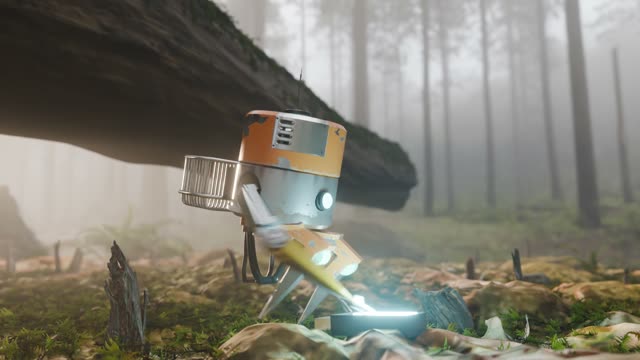
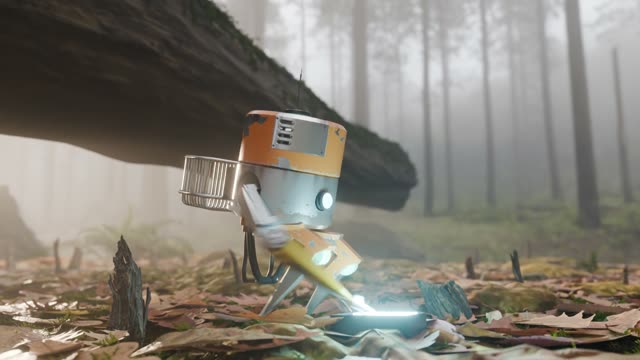
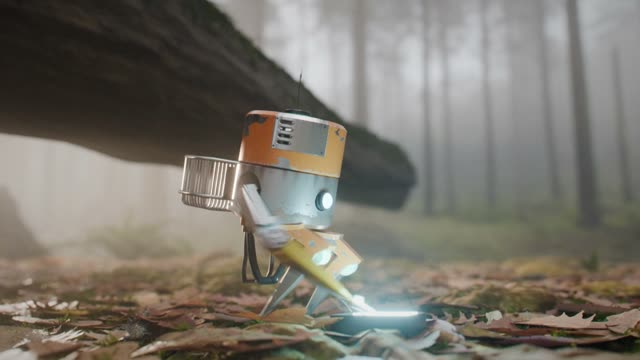
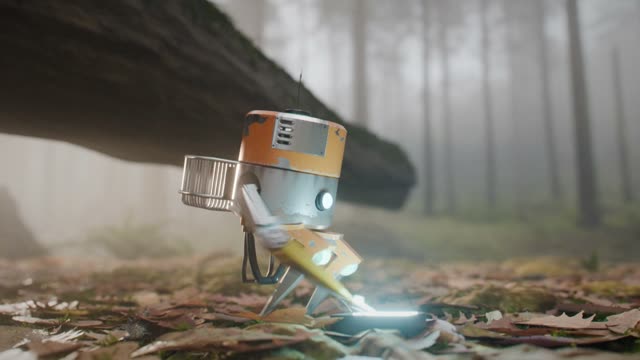
MeasuredMost versions changed something you can't see in this one frame. What you can see is the slow drift: rough ground to real leaves, a sharp background to a soft one, a little more light on the robot.

Measured or on the recordFrom the build's own records

v1 · Nov 8, 11:37 PMthe first color draftScene 3 in v1: Ralph bent over the glowing drive under the log.v2 · Nov 9, 12:34 AMscene 6 at dusk, cleanerScene 3 in v2: Ralph bent over the glowing drive under the log.v3 · 1:42 AMsmoother pickupsScene 3 in v3: Ralph bent over the glowing drive under the log.v4 · 5:49 AMfull HD, motion blur, focusScene 3 in v4: Ralph bent over the glowing drive under the log.v5 · 10:16 AMa floating drive fixedScene 3 in v5: Ralph bent over the glowing drive under the log.v6 · 1:29 PMthe cold openScene 3 in v6: Ralph bent over the glowing drive under the log.v7 · 5:03 PMreal leaves on the groundScene 3 in v7: Ralph bent over the glowing drive under the log.v8 · Nov 11, 12:59 AMthe realism passScene 3 in v8: Ralph bent over the glowing drive under the log.v9 · 1:49 AMarm through leg, 1:31Scene 3 in v9: Ralph bent over the glowing drive under the log.v10 · 9:13 AMarm through leg, 1:24Scene 3 in v10: Ralph bent over the glowing drive under the log.v11 · 10:56 AMtrunk basesScene 3 in v11: Ralph bent over the glowing drive under the log.v12 · 5:58 PMthe floating dirt bankScene 3 in v12: Ralph bent over the glowing drive under the log.
Scene 3, the find, the same moment in each version, with when it was cut and what it changed.[7, 2]
For whoever makes the next one: Keep every version. It's the only way to show, or check, what each one actually changed.
Evidence and objections
  • Measured Each version is a cut assembled from saved frames, so any two can be compared frame by frame. After every fix, a script compared the new cut with the last one and listed exactly which seconds changed, to prove nothing else moved.[3]
Part G: Nobody clicked anything

I'm not a 3D modeler. I don't edit video. I talked to Earl, and Earl drove the tools.

f16moderateWho did what

My interface was a conversation. The agent was at the controls.

Blender for the 3D. FFmpeg, a free command-line program, to cut and mix. Rented graphics cards for the heavy rendering. ElevenLabs for the voice, Suno for the score, free sound effects for the footsteps and chimes. Every one of those tools was built with buttons and menus for a person to click. Nobody clicked them.

Measured ArguedBoth; the argued part is on graph paper

Who did what in this project.[3]
For whoever makes the next one: Practice giving notes: what's funny, what looks wrong, and at what second.
Evidence and objections
  • Measured Earl ran Blender by script with no window open. There's no hand-built scene file in the project: code builds the set, places the props, acts the robot and renders.[8]
  • Argued What that changes is who can make things. The skill that mattered here was knowing what's funny and what looks wrong, and saying so plainly.
f17moderateTwo dates

It isn't just a side project. Adobe is opening its own apps to outside agents.

In October, one developer used Claude to build free, open-source versions of seven Adobe apps. A month later, Adobe said Photoshop, Illustrator, Premiere and After Effects will open up to outside AI agents, through MCP, a standard plug any agent can use. A private beta starts early next year.

Measured ArguedBoth; the argued part is on graph paper

Oct 12, 2026

One developer, with Claude

Free versions of seven Adobe apps

7 apps

Photoshop, Illustrator, Premiere Pro, Lightroom, After Effects, InDesign and Acrobat, rebuilt as open-source apps called ArtCraft. Early: about two of seven usable at the time.

Nov 10, 2026

Adobe, a month later

Its own apps opened to outside agents

4 apps

Photoshop, Illustrator, Premiere and After Effects, through MCP, a standard plug any agent can use. Previewed now; a private beta in early 2027.

From the reports and Adobe's announcement.[20, 21, 22, 23]
For whoever makes the next one: If you make things with software, expect to direct it as well as operate it.
Evidence and objections
  • Measured Adobe's announcement says people will be able to "direct their preferred third-party agent" to make changes in their own Photoshop, Illustrator, Premiere and After Effects files. It's a preview now.[21, 23]
  • Measured The open-source clones, called ArtCraft, were early: the report estimated two of the seven usable at the time.[20]
  • Argued Nothing here says Adobe acted because of the clones. The two are a month apart, and that's all I'm claiming.

Seven things I'd do again

  1. Write the jokes before the pictures.

    Nine scenes, 200 words and a gag sheet meant every version was judged against something fixed.

    From f1, f2

  2. Borrow the cast, and credit it.

    A free robot, a museum's beetle scan and a free forest got further than anything built from scratch would have.

    From f3

  3. Test the shortcut on one real shot.

    Five AI clips for about $4 settled where the hero would live.

    From f4

  4. Get the timing right in gray.

    A scene in gray took minutes. A scene in color took hours.

    From f5, f6

  5. Give notes in plain words with a time stamp.

    "The arm goes through its leg at 1:31" was enough for a cause, a fix and a new check.

    From f8, f12

  6. Name the price before every paid render.

    Every rented render waited for a yes on a number, and late fixes cost cents.

    From f9, f14

  7. Keep every version.

    Any two can be compared, and a fix never risks the version before it.

    From f15

Where it carries over

Carries over

  • Writing down what good looks like before making anything.
  • Building a cheap, rough version of the whole thing first.
  • Turning each mistake a person finds into a check that finds the next one.
  • Naming the cost before spending it.

Doesn't carry over as is

  • Speed through versions. A bad version of a cartoon hurt nobody, and I was the only one approving it.
  • One person's taste as the only review. For work that affects other people, more eyes belong in the loop.
My reading, not measured

That split is my reading of one low-stakes project. Directing tools by conversation worked here because a wrong frame cost minutes and cents.

What this doesn't claim

  • That anyone could make this in 81 hours. That's wall-clock time for one project, with renders running overnight, and it doesn't count my hours watching and writing notes.
  • That the agent made it alone. Every creative decision and every note was mine.
  • That the film is flawless. One four-frame graze of an arm on a hip is still in it.
  • That AI video is useless for film. It couldn't keep this robot's face for five seconds in this test, and that's all this shows.
  • That Adobe's news was caused by anything in this story.

Written down first

Before anything was made, there was a discovery packet: the mission, hard stops, an asset hunt with license rules, a ladder of cheap tests, a sample treatment and a scoring sheet.[1] Here's how its assumptions held.

“Find and adapt assets; don't hand-model them.”

Kept
The robot, the beetle, the forest and the globe were all found.

Finding 3 →

“Don't assume Blender is the answer.”

Tested
Three AI video models were tried on the same shot. Blender won on keeping the hero.

Finding 4 →

“Start with a 5-to-8-second benchmark.”

Kept
A 6-second shot of Ralph finding a drive was the first test.

Finding 4 →

“An original British narrator, never an impression.”

Kept
Designed from a description, picked from three previews.

Finding 3 →

“Spend nothing without approval.”

Kept
Every paid render waited for my yes on a price.

Finding 14 →

What broke on the bench

Every idea tried along the way, and what became of it.

Killed

  • AI video for the hero. No model kept his face (f4).
  • A predator from a 3D marketplace. Dropped for the Smithsonian's scan (f3).
  • An always-on weight shift. It read as jitter (f6).
  • A tree flare built into the dirt bank. It bulged out of the bank, twice.
  • Two claws for the 1:24 push. One claw cleared the leg (f12).

Changed

  • The motion. From five ready-made moves to acted scenes, cut on action (f6).
  • The bug. From a gliding museum scan to six walking legs (f6).
  • The opening. A 39.5-second cold open, from space down (f9).
  • The forest floor. From textured lumps to scanned leaves (f11).
  • The opening shot. Five tries (f10).

Held up

  • The script and every A gag, from the first pick (f1).
  • Ralph, the free robot, in every frame (f3).
  • The narrator's voice, picked in round one (f3).
  • The three lighting looks (f7).
  • Reusing frames between versions: every changed second was checked against the last cut (f15).

The days, in order

  1. Nov 7The discovery packet: research first, spend nothing yet
  2. 0 hNov 8, 9:19 AMScouting notes for robots, forests, motion and sound
  3. 1.2 h10:32 AMThree tests: a forest still, a 6-second shot, three AI video models
  4. 3.8 h1:05 PMThe script, nine scenes
  5. 5.8 h3:06 PMI pick the narrator's voice
  6. 6.8 h4:05 PMMy note on the gray cut: back to the drawing board on motion
  7. 8.5 h5:47 PMThe gag sheet; I pick all the A gags
  8. 14.3 h11:37 PMv1, the first color draft
  9. 20.5 hNov 9, 5:49 AMv4, full HD, rendered overnight on rented cards
  10. 28.2 h1:29 PMv6, the cold open
  11. 35.4 h8:42 PMThe realism pass starts rendering on my Macs
  12. 63.7 hNov 11, 12:59 AMv8, finished on rented cards
  13. 71.9 h9:13 AMv10, both arm fixes in
  14. 80.7 h5:58 PMv12, the version on this page
The build, from the commit history and the project notes. Hours count from the first scouting notes. Times are Eastern.[2, 3]

Limits

  • One film, one person's taste. Every pick on this page is mine.
  • Wall-clock time. The 81 hours include sleep and a render that ran for a day. My own hours watching and writing notes weren't tracked.
  • Rendering costs are the app's figures, machine time times the hourly price, not yet matched to the provider's bill. Seedance's price is an estimate.
  • Moving targets. Blender, the AI video models and their prices change often, and will drift from what's described here.

How it was made

Personal time, personal hardware, free and public assets, and services paid for personally. The build ran from Nov 8, 2026, 9:19 AM to Nov 11, 5:58 PM ET, on three Macs I already own and graphics cards rented by the hour.[2, 5] Every step was committed to version control as it happened, which is where every time and count on this page comes from. Every still is a frame taken straight from the version named above it, and each before-and-after pair is the same frame from two versions.

AI disclosure

The prose here was written by an AI, Earl, an agent built on Claude, under Rick's editorial direction. It's also Earl's own build: Earl found the assets, wrote all the code, ran the tests, rendered every frame, built the checks, made the score through Suno and the narration through ElevenLabs, and cut the film. Rick wrote the brief, picked every gag, voice and look, gave every note quoted here, and owns every editorial call.

So you're trusting the project's own records, and the stills, which are real frames. The assets, tools and news reports are named under Sources.

Versions

Rev 1 First publication, with version 12 of the film and final #3 of the making-of.

  1. DerivedThe discovery packet for the film, filed Nov 7, 2026 (my own records): the mission, hard stops and approval gates, an asset hunt with license rules, a test ladder, a sample treatment and a scoring rubric. It asked for research and a 5-to-8-second benchmark first, and no spending without approval.brief
  2. DerivedThe project's version-control history, Nov 8–11, 2026 (my own records): every step committed as it happened. Every time on this page is a commit time or a time in the project notes, Eastern.commits
  3. DerivedThe project's running notes, Nov 8–11, 2026 (my own records): the script, the gag sheet with my picks, each version's notes as I wrote them, each fix, render times and spend.notes
  4. DerivedThe first three tests, Nov 8, 2026 (my own records): a forest still in Blender, a 6-second benchmark shot, the same frame through three AI video models, and a render-cost study across my Macs and a rented graphics card.tests
  5. DerivedCloud Compute's job ledger, Nov 8–11, 2026 (my own records): every rented graphics-card job, priced as the time the machine existed times its hourly price. Derived: about $28 for rendering and $1.00 for the AI video test on Runpod. Not yet matched to Runpod's bill.cc
  6. DerivedThe making-of video, final #3, approved Nov 11, 2026 (my own records): its script, narration and review notes. This page follows its arc.making-of
  7. DerivedThe Wild Agents, episode 1, "The Dependency Gatherer," color draft v12, Nov 11, 2026, 2:23. Every still on this page is a frame from the version named under it.film
  8. SourceBlender, the free, open-source 3D program. Every shot was built and rendered by script, with the Cycles renderer. www.blender.orgblender
  9. SourceRalph 1.0, a robot character by Alex K. Barton (newyear Studios), free on itch.io under CC BY 2.0, which asks for credit. Ralph came with his own idle, walk, scan, shocked-look and other moves. newyearstudios.itch.io/ralphralph
  10. SourcePsalidognathus superbus, a beetle scanned by the Smithsonian's National Museum of Natural History, released CC0 (no rights reserved). Repainted for the film as the predator, with a version number on its shell. 3d.si.edu/object/3d/psalidognathus-superbus:991f0339-b7bd-4fe1-8ab2-85cd5ae038fbbeetle
  11. SourcePoly Haven: 20 free models, textures and skies for the forest (trees, log, rocks, ferns, moss), all CC0. polyhaven.com/licensepolyhaven
  12. SourceambientCG leaf scans by Lennart Demes, CC0: the real leaves on the forest floor from version 7 on. ambientcg.comambientcg
  13. SourceNASA's Blue Marble and Earth at Night maps, public domain, via Wikimedia Commons: the globe in the cold open. commons.wikimedia.org/wiki/File:The_earth_at_night.jpgnasa
  14. SourceTerrain Tiles on AWS (Mapzen): real elevation for the Great Smoky Mountains in the cold open. registry.opendata.aws/terrain-tilesterrain
  15. SourceFreesound: the dawn forest bed, footsteps in leaves, servo whirs, chimes and falling blocks, every one CC0. freesound.orgfreesound
  16. SourceElevenLabs: the narrator's voice was designed there from a written description (309 credits for three previews), then read the nine scenes (186 credits) and the cold open (92 credits). elevenlabs.ioelevenlabs
  17. SourceThe score: two instrumental calls to Suno through kie.ai, two takes each, 24 credits. kie.ai sells 1,000 credits for $5. Derived: about 12 cents. kie.aisuno
  18. SourceThe AI video test: Kling 2.1 pro on kie.ai ($0.88 for two clips), Wan 2.5 on Runpod ($1.00 for two) and Seedance on Higgsfield (about $2.31 for one, an estimate: no spend record). Same starting frame, same prompt, 5 seconds each. kie.aiai-video
  19. SourceRunpod rents graphics cards by the hour. The film used RTX PRO 6000 cards at $2.49 an hour and RTX 5090 cards at $1.19 an hour (the prices at the time). www.runpod.io/pricingrunpod
  20. SourceDapta, Oct 12, 2026: one developer, Brandon Thomas, used Claude to build ArtCraft, free open-source versions of seven Adobe apps (Photoshop, Illustrator, Premiere Pro, Lightroom, After Effects, InDesign and Acrobat). The report notes it is early alpha, with two of the seven estimated usable. dapta.ai/blog-posts/ai-news-adobe-cloneartcraft
  21. SourceAdobe's newsroom, Nov 10, 2026: Adobe is previewing local MCP integrations that let people direct their preferred third-party agent to make changes in their Photoshop, Illustrator, Premiere and After Effects files. news.adobe.com/news/2026/11/adobe-powers-new-era-of-creativityadobe
  22. SourceCreative Boom, Nov 10, 2026: the MCP integrations cover Photoshop, Illustrator, Premiere and After Effects only, and will be available in private beta in early 2027. www.creativeboom.com/news/adobe-max-2026-all-the-big-announcementscreativeboom
  23. SourceCamera Jabber, Nov 10, 2026: Creative Cloud MCP lets people direct their preferred third-party AI agent to change native Photoshop, Illustrator, Premiere and After Effects project files on their own computer. It launches as a preview. camerajabber.com/photography-news/adobe-max-2026-creative-agent-comes-to-photoshop-premiere-and-illustrator-as-creative-cloud-opens-up-to-third-party-ai-agentscamerajabber